
Do you ever feel like you are trying to eat fairly well, but your body still seems to work against you? Maybe you start the day with cereal, toast, fruit, or a smoothie. By mid-morning, you need coffee. After lunch, your energy drops. By 3 p.m., you are hungry again, craving something sweet, feeling foggy, or wondering why you are suddenly so irritated.
Many people blame stress, getting older, poor sleep, or a lack of willpower. But oftentimes, blood sugar is part of the picture.
And before you think, “I’m not diabetic, so this does not apply to me,” keep reading. Blood sugar affects everyone. It can influence energy, hunger, cravings, mood, sleep, concentration, and how easy or difficult it feels to manage weight.
Amy and I (Brent) recently recorded an episode about a book we keep coming back to: Glucose Revolution by Jessie Inchauspé, also known as the Glucose Goddess. This article is the written version of that conversation. We are sharing simple ideas that may help you create steadier energy and fewer cravings without extreme dieting.
Why Blood Sugar Matters Even If You Do Not Have Diabetes
Glucose is the main type of sugar your body uses for energy. Your body gets glucose from carbohydrates, including bread, cereal, fruit, juice, rice, pasta, potatoes, sweets, and many snack foods.
After you eat, your blood sugar rises. Your pancreas releases insulin, a hormone that helps move glucose out of your bloodstream and into your cells for energy or storage.
That is normal. The issue is not that blood sugar rises at all. The issue is when it rises quickly and often, followed by a sharp drop.
That up-and-down pattern can feel like:
- Afternoon fatigue
- Brain fog
- Sugar cravings
- Feeling hungry soon after eating
- Mood changes or irritability
- Difficulty concentrating
- Feeling “hangry”
- Energy crashes that lead to more coffee or snacks
You do not need a diabetes diagnosis to notice these patterns.
The Blood Sugar Roller Coaster
Think about eating a sweet coffee drink, a bowl of cereal, juice, candy, crackers, or a piece of fruit by itself.
These foods can raise blood sugar quickly, especially when they are eaten without protein, fat, or fiber. Your body responds by releasing insulin to bring blood sugar back down.
Sometimes that response can leave you feeling worse than before you ate. You may feel tired, hungry, shaky, foggy, or desperate for another quick source of energy. Then you eat more sugar or refined carbohydrates, and the cycle starts again.
This is not a character flaw. It is a biological pattern. The goal is not to fear carbohydrates or eliminate every food you enjoy. The goal is to create meals that help blood sugar rise more gradually and stay more stable.
Why Steadier Blood Sugar Can Support Your Health
Blood sugar regulation is connected to more than energy and cravings. Over time, frequent blood sugar spikes and high insulin levels may contribute to insulin resistance. Insulin resistance is associated with prediabetes, type 2 diabetes, fatty liver disease, high triglycerides, high blood pressure, and increased cardiovascular risk.
For women, insulin resistance is commonly associated with polycystic ovary syndrome, or PCOS. It can also play a role in gestational diabetes during pregnancy.
For men, insulin resistance often appears alongside other metabolic concerns, including high blood pressure, cholesterol changes, low testosterone, and increased abdominal weight.
Blood sugar is not the only factor behind these conditions, and it is important to work with your healthcare provider if you have symptoms or concerns. But food choices and meal patterns are one area where many people can make practical changes.
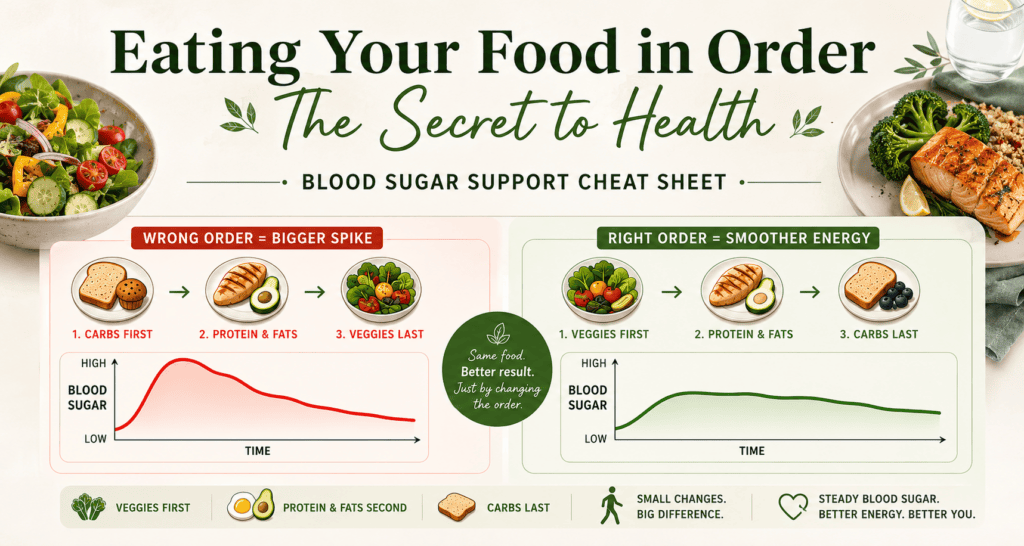
The Simplest Strategy: Eat Your Food in a Different Order
One of the easiest ideas from Glucose Revolution is also one of the most practical:
Eat vegetables first, then protein and healthy fats, then starches or sweets.
For example, if your meal includes chicken, roasted vegetables, rice, and dessert, try eating it in this order:
- Vegetables
- Chicken or other protein
- Healthy fats, if included
- Rice, potatoes, bread, or other starches
- Dessert, if you are having it
You do not need to wait between each food. You do not need to measure every bite. You are simply changing the order of the foods already on your plate.
Research has found that eating vegetables and protein before carbohydrates can reduce the rise in blood sugar and insulin after a meal compared with eating the same foods in the opposite order.
Why Vegetables Come First
Vegetables contain fiber. Fiber slows digestion and can slow the rate at which glucose enters the bloodstream.
When you eat vegetables first, you may feel fuller, have a gentler rise in blood sugar after the meal, and be less likely to experience a crash later.
A simple goal is to make about one-third of your plate non-starchy vegetables when possible. That might look like a salad before your entrée, green beans before potatoes, broccoli before rice, or sautéed vegetables before pasta.
You do not have to eat perfectly. Even a small serving of vegetables before the rest of your meal can be a useful starting point.
Protein and Healthy Fats Help You Stay Full
Protein and healthy fats can also help slow digestion and support steadier energy. Instead of eating carbohydrates by themselves, pair them with protein, fat, or fiber.
For example:
- Fruit with Greek yogurt, cheese, or nuts
- Toast with eggs or avocado
- Crackers with tuna, turkey, hummus, or cheese
- Rice with chicken, fish, tofu, or beans
- A baked potato with protein and vegetables
This does not mean fruit, bread, or potatoes are “bad.” It simply means they may feel better in your body when they are part of a balanced meal.
Breakfast Can Set the Tone for the Day
Breakfast is one of the most common places people begin the blood sugar roller coaster.
A breakfast of cereal, pastries, juice, sweetened coffee, fruit alone, or a fruit-heavy smoothie may leave some people hungry and tired within a few hours.
Try building a more savory, protein-forward breakfast instead.
Examples include:
- Eggs with vegetables and avocado
- An omelet with cheese and sautéed vegetables
- Greek yogurt with nuts, seeds, and berries
- Cottage cheese with berries and nuts
- Breakfast tacos with eggs, vegetables, and a small tortilla
You do not have to give up every breakfast food you love. The goal is to include enough protein, fiber, and healthy fat to help you feel satisfied and steady through the morning.
A Note About Smoothies
Smoothies can be convenient, but they are not always as balanced as they appear.
A smoothie made mostly with fruit, juice, sweetened yogurt, or honey can deliver a lot of sugar quickly. Even when fruit contains fiber, drinking blended fruit may be less filling than eating the fruit whole.
If you enjoy smoothies, make them more balanced by adding protein and healthy fats. Try unsweetened Greek yogurt, cottage cheese, protein powder, chia seeds, flaxseed, nut butter, spinach, berries, and water or unsweetened milk instead of juice.
Another simple option is to eat a few vegetables, eggs, or another protein source before drinking your smoothie.
Snack Without Restarting the Roller Coaster
Snacking is not automatically a problem. But frequent snacks made mostly of sugar or refined carbohydrates can keep energy and hunger on a roller coaster all day.
If you need a snack, choose something with protein, fiber, or healthy fat.
Good options include vegetables and hummus, cheese and cucumber slices, Greek yogurt, hard-boiled eggs, nuts or seeds, turkey roll-ups, cottage cheese, apple slices with nut butter, or berries with yogurt.
The key is to avoid “naked carbs,” meaning carbohydrates eaten by themselves without protein, fat, or fiber.
Simple Habits That May Help
You do not need to overhaul your life overnight. Start with one or two of these habits:
- Eat vegetables first at meals.
- Pair carbohydrates with protein, fat, or fiber.
- Make breakfast more savory and protein-focused.
- Take a 10-minute walk after a meal when you can.
- Build meals around vegetables, protein, and healthy fats before adding starches.
- Choose water, sparkling water, coffee, or unsweetened tea more often than juice or soda.
- If you eat dessert, have it after a balanced meal instead of by itself.
Some research suggests that vinegar before a meal may modestly reduce blood sugar responses for some people. If you want to try it, use a small amount diluted in water and avoid it if you have reflux, ulcers, dental concerns, kidney disease, or have been advised not to use it by your healthcare provider.
What About Keto or Carnivore?
Keto and carnivore diets can reduce blood sugar spikes because they limit carbohydrates. Some people feel better on these approaches, especially in the short term.
However, highly restrictive diets can be difficult to maintain and may not be appropriate for everyone.
Our preference is to start with a more flexible approach: whole foods, balanced meals, more vegetables, enough protein, healthy fats, and better food order.
For many people, this creates meaningful improvement without feeling like they have to give up every carbohydrate or favorite food forever.
What This Can Look Like for Kids
Kids can experience energy crashes too. A breakfast of sugary cereal, pastries, or juice may lead to hunger, irritability, or difficulty focusing later in the morning.
A more balanced breakfast may help them stay full and steady longer. Eggs and fruit, Greek yogurt with berries, whole-grain toast with eggs or nut butter, or cheese with vegetables and fruit can be simple options.
Every child is different, and families should speak with their pediatrician or a qualified healthcare professional about individual nutrition needs.
What You May Notice Over Time
When people begin building more balanced meals and reducing frequent blood sugar spikes, they often report more stable energy, fewer afternoon crashes, less intense sugar cravings, better fullness after meals, improved focus, and fewer “hangry” moments.
Weight changes, cholesterol changes, hormone symptoms, and other health outcomes vary from person to person. These strategies are not a replacement for medical care, medications, or individualized nutrition guidance. They are practical habits that may support your overall health.
Start With Your Next Meal
You do not need to do everything perfectly.
At your next meal, try this:
- Eat a serving of vegetables first.
- Eat your protein next.
- Enjoy your starches after that.
- Take a short walk if it fits your day.
Small changes repeated consistently can add up.
Want to Go Deeper?
If this topic resonates with you, we recommend starting with Glucose Revolution by Jessie Inchauspé, also known as the Glucose Goddess. Her educational content offers practical ideas for reducing blood sugar spikes without extreme dieting.
If you have questions or want help figuring out where to begin, reach out to our team. We can help you identify practical, sustainable steps that fit your health goals and lifestyle.
Sources:
- Shukla AP, et al. Food Order Has a Significant Impact on Postprandial Glucose and Insulin Levels. Diabetes Care. 2015.
- Shukla AP, et al. The impact of food order on postprandial glycaemic excursions in prediabetes. Diabetes, Obesity and Metabolism. 2019.
- Shishehbor F, et al. Vinegar consumption can attenuate postprandial glucose and insulin responses: a systematic review and meta-analysis of clinical trials. Diabetes Research and Clinical Practice. 2017.
- Centers for Disease Control and Prevention. National Diabetes Statistics Report.
- Centers for Disease Control and Prevention. Heart Disease Facts.